Dental Implants
Dental Implants in Turkey | Restore Your Smile with World-Class Care
Save up to 70% on dental implants in Turkey while enjoying advanced care from Turkey’s leading experts in state-of-the-art clinics.

Quick Summary
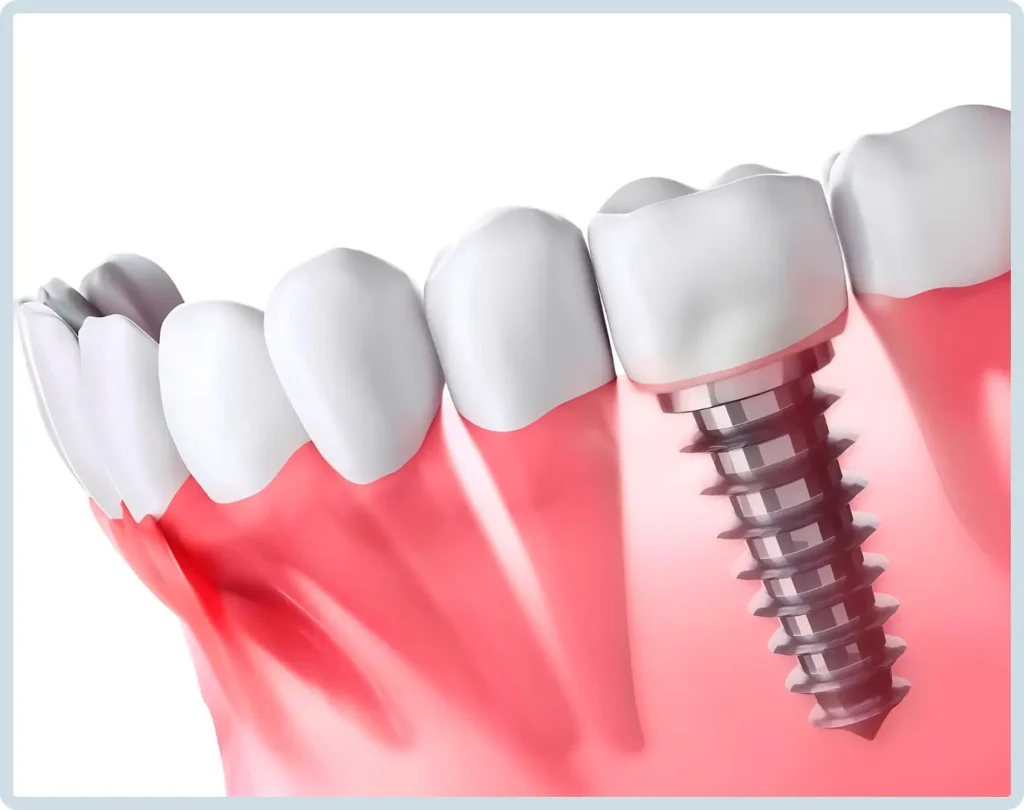
A dental implant is a titanium post placed into the jawbone to permanently replace a missing tooth root, topped with a ceramic crown. Treatment in Turkey typically takes two visits over 3–6 months, with the surgical stage completed in 5–7 days in Istanbul. Turkey market prices start from £400 / $540 per implant — compared to £2,000–£2,500 in the UK.
Free Consultation
Dental Implants in Turkey: Key Takeaways
- A dental implant is a surgically placed titanium or zirconia post that replaces a missing tooth root and is topped with a ceramic crown.
- Treatment requires two visits over 3–6 months: the surgical stage (5–7 days in Istanbul) and the final crown fitting (3–5 days).
- Turkey market prices range from £400–£900 / $540–$1,220 per implant plus crown — compared to £2,000–£2,500 in the UK and $3,000–$5,000 in the US.
- Major implant brands available include Straumann, Nobel Biocare, MIS, and Osstem; zirconia options (BioHPP, Z-Systems) are also offered.
- Dental implants suit adults with sufficient bone density and healthy gums who need one or more missing teeth replaced permanently.
- Implants do not suit patients who cannot return for a second visit, heavy smokers, those with uncontrolled diabetes, or those with active periodontal disease.
| Field | Details |
|---|---|
| Procedure | Dental implant + abutment + ceramic crown |
| Best for | One or more missing teeth |
| Treatment time | 2 visits over 3–6 months |
| Stay in Turkey | Visit 1: 5–7 days; Visit 2: 3–5 days |
| Implant brands | Straumann, Nobel Biocare, MIS, Osstem |
| Smiley Clinics price* | From £450 / $610 / €520 per implant + crown |
| UK price | Typically £2,000–£2,500 per implant + crown |
| Potential saving | Up to 70–78% compared with UK private prices |
| Recovery | Soft food for 7–10 days; full integration in 3–6 months |
| Lifespan | 20–25 years or longer with proper care |
*Indicative price only. Final cost depends on implant brand, bone graft needs, crown material, and clinical assessment.
What Is a Dental Implant?
A dental implant is a titanium or zirconia post surgically placed into the jawbone to replace a missing tooth root, topped with an abutment and a custom ceramic crown. The implant fuses with the surrounding bone through a process called osseointegration, creating a stable, permanent foundation that functions like a natural tooth.
Dental implants in Turkey are placed using the same titanium systems used in UK, US, and EU clinics — brands including Straumann, Nobel Biocare, MIS, and Osstem — and are typically completed across two visits to Istanbul totalling 8–12 days in country over a 3–6 month period. Prices at properly equipped Istanbul clinics range from £400–£900 / $540–$1,220 per implant and crown, compared to £2,000–£2,500 in the UK private market, reflecting Turkey’s lower operating and laboratory costs rather than differences in material quality.
When Is a Dental Implant Needed?
- Single or multiple missing teeth where the patient wants a fixed, permanent replacement
- Teeth lost to decay, trauma, or advanced periodontal disease that cannot be restored
- Patients who wish to avoid removable dentures
- Support for a fixed bridge where adjacent teeth are healthy and should not be prepared
- Anchor implants for an All-on-4 or All-on-6 full-arch restoration
How Does a Dental Implant Work?
A dental implant works in three stages. First, the titanium post is surgically inserted into the jawbone under local anaesthesia, and a healing cap is placed to protect the site. Over the following 3–6 months, a process called osseointegration occurs: bone cells attach to the implant surface and gradually integrate with it, creating a firm biological bond.
Once osseointegration is confirmed — typically by X-ray — the patient returns for the second visit. The healing cap is removed, an abutment (connector) is attached, and a custom ceramic crown is fitted on top. The crown is fabricated to match the colour, shape, and occlusion of surrounding teeth.
The completed implant looks and functions like a natural tooth: it can withstand normal biting forces, is cleaned like a natural tooth with brushing and flossing, and does not affect adjacent teeth the way a traditional bridge does.
Types & Materials
The two most common implant materials available in Turkey are titanium and zirconia. Titanium is the established standard, backed by decades of clinical evidence and available in all major international brands. Zirconia is a metal-free alternative suited to patients with documented metal sensitivity or those seeking a fully ceramic solution — though the long-term evidence base is smaller than for titanium. The right choice depends on individual anatomy, bone density, aesthetic preference, and medical history.
| Material / Brand | Aesthetics | Durability | Cost Tier | Best For |
|---|---|---|---|---|
| Straumann titanium | Excellent; subgingival placement means no metal is visible | Very high; industry-leading surface technology | Premium | Premium cases and patients prioritising the strongest evidence base |
| Nobel Biocare titanium | Excellent; broad crown and abutment library for aesthetic matching | Very high; extensive long-term clinical documentation | Premium | Complex cases, All-on-4, and All-on-6 frameworks |
| MIS / Osstem titanium | Good; solid aesthetic outcomes in most standard cases | High; CE-certified and widely used internationally | Mid-range | Standard single-tooth replacements and budget-conscious patients |
| BioHPP / Z-Systems zirconia | Exceptional; all-white material with no grey shadow at the gum line | Good; developing evidence base, but more brittle than titanium | Premium | Thin gum tissue, metal sensitivity, or high aesthetic demands |
Your Smiley Clinics coordinator will discuss brand options with you before treatment, taking into account your bone density, gum characteristics, and budget. The final recommendation comes from the treating dentist following clinical assessment — not a pricing menu.
The Dental Implant Procedure: Step-by-Step
Dental implant treatment in Turkey requires two visits over 3–6 months, with osseointegration — the period during which the implant bonds with the jawbone — occurring between the two trips. Most patients spend 5–7 days in Istanbul for the surgical visit and 3–5 days for the crown fitting.
Before You Travel
- Complete an online consultation form and submit existing dental X-rays or a panoramic OPG scan if available.
- Receive a written treatment plan from your Smiley coordinator confirming the implant brand, crown material, number of units, indicative cost, and timeline.
- Book flights and accommodation; Smiley’s team assists with logistics.
Visit 1, Days 1–7: Assessment & Surgical Placement
- Day 1 — In-clinic consultation: Full clinical examination, CBCT cone-beam CT scan, and OPG X-ray to assess bone volume, density, and anatomy. Bite analysis and gum assessment performed.
- Day 1–2 — Treatment planning: Implant position, brand, and size confirmed. If bone grafting is required, this is discussed at this stage — some grafts can be performed simultaneously with implant placement; others require a separate healing period (discuss with your dentist).
- Day 2–3 — Surgical placement: Implant post placed into the prepared bone socket under local anaesthesia. A healing cap or temporary crown is positioned. The procedure typically takes 45–90 minutes per implant.
- Days 3–5 — Post-surgical monitoring: Clinic review to confirm healing, manage any sensitivity, and provide aftercare instructions for the osseointegration period at home.
- Day 5–7 — Departure: Written aftercare protocol provided, including diet guidance, oral hygiene instructions, and emergency contact details.
Between Visits: Osseointegration (3–6 Months at Home)
- Osseointegration occurs as bone cells gradually bond to the implant surface. During this period you maintain normal life, follow the cleaning protocol, and avoid trauma to the site.
- At approximately 8–12 weeks your Smiley coordinator checks in remotely. At 3–6 months, an X-ray at a local dentist confirms integration before you book your return visit.
Visit 2, Days 1–5: Crown Fitting & Completion
- Day 1 — Abutment connection: Healing cap removed, abutment attached to the osseointegrated implant post.
- Day 1–2 — Impression and crown fabrication: Digital or physical impression taken; ceramic crown fabricated in Smiley’s in-house laboratory, colour-matched to adjacent teeth.
- Day 3–4 — Crown fitting: Crown tried in, bite adjusted, permanently cemented or screw-retained once confirmed.
- Day 4–5 — Final review: Occlusion checked, cleaning technique demonstrated, warranty terms confirmed in writing.
Why Turkey for Dental Implants?
The price difference between dental implants in Turkey and the UK, US, or EU reflects lower operating costs — clinic rental, staff salaries, and laboratory overheads — rather than differences in implant brand or material. A Straumann implant placed in Istanbul uses the same Swiss-manufactured post as one placed in London or New York. The surgical technique, imaging protocols, and crown fabrication processes are documented and follow internationally recognised standards.
| Country / Region | Average Cost per Implant + Crown | Wait Time | Materials / Brands |
|---|---|---|---|
| United Kingdom | £2,000–£2,500 | 2–6 weeks for initial appointment | Straumann, Nobel Biocare, Dentsply |
| United States | $3,000–$5,000 | 2–8 weeks, varies by state | Straumann, Nobel Biocare, BioHorizons |
| Germany / Netherlands | €1,800–€2,800 | 3–8 weeks | Straumann, Camlog, Ankylos |
| Turkey market average | £400–£900 / $540–$1,220 / €460–€1,040 | Same week | Major international brands, CE-certified systems |
| Smiley Clinics, Istanbul | £450–£750 / $610–$1,020 / €520–€870* | Within 7 days | Straumann, Nobel Biocare, MIS, Osstem, BioHPP |
*Indicative range. Final price is confirmed during consultation. Currency conversions should be checked before publishing.
Why Smiley Clinics for Dental Implants in Istanbul?
Smiley Clinics is a strong option for dental implants in Turkey for UK, US, and EU patients. The clinic offers implant treatment using Straumann, Nobel Biocare, MIS, and Osstem systems, with CBCT pre-surgical planning standard for every implant case, digital impression technology, and in-house ceramic crown fabrication. English-, Turkish-, and Arabic-speaking coordination is available throughout, and patients receive a written treatment plan before travel and a structured remote aftercare protocol after returning home.
Clinical Leadership
Dr. Mubasher Najar, DMD (Istanbul University 2013, 13+ years clinical experience) leads the treating team at Smiley Clinics. Content on this page is aligned to GDC, ADA, ITI, EAO, BACD, FDI, and TDB patient communication principles. Medical review of this article is pending — see editor’s notes.
Technology & Laboratory
- CBCT cone-beam CT scanning — mandatory for all implant cases for bone volume and anatomy assessment
- Digital intraoral scanning — reduces impression discomfort and improves crown accuracy
- CAD/CAM ceramic crown fabrication — in-house, typically within 2–3 working days
- All implant systems are CE-certified; original manufacturer packaging confirmed at treatment planning stage
Patient Journey Support
- English, Turkish, and Arabic-speaking patient coordinators
- Private airport transfers (confirm current status with coordinator)
- Accommodation guidance for Istanbul stays
- Written treatment plan and cost agreement before travel
- Remote aftercare monitoring during the osseointegration period
- Warranty terms confirmed in writing before treatment — details provided by your coordinator
Dental Implants vs Related Treatments: Which Do You Need?
Implants, All-on-4 restorations, and dental bridges all replace missing teeth — but they differ significantly in how many teeth are replaced, whether bone preservation is involved, and what the treatment timeline looks like.
| Treatment | Best For | Key Difference | Replaces Missing Tooth? | Turkey Timeline |
|---|---|---|---|---|
| Dental Implant | 1–3 missing teeth with healthy bone | Replaces root and crown, preserves jawbone, and does not affect adjacent teeth | Yes — fully | 2 visits over 3–6 months |
| All-on-4 / All-on-6 | Full arch where all or most teeth are missing | 4–6 implants support a full fixed bridge; immediate temporary teeth are often possible | Yes — full arch | 2 visits over 3–6 months |
| Dental Bridge | 1–3 missing teeth when the patient cannot have surgery | Supported by crowning adjacent teeth; no surgery, but no root replacement | Yes — but no root replacement | 1 visit, usually 5–7 days |
For a full comparison of implant options, see: All-on-4 in Turkey | Dental Crowns in Turkey.
Pricing Compared: UK, US, EU vs Turkey
Dental implants in Turkey typically cost £400–£900 / $540–$1,220 per implant and crown in the wider market, with Smiley Clinics’ indicative range at £450–£750 / $610–$1,020 depending on implant brand and crown material. This compares to UK private prices of £2,000–£2,500 and US prices of $3,000–$5,000 per implant and crown — a saving of up to 78% at the upper end of the UK range.
| Treatment Variant | UK Price | US Price | EU Price | Smiley Clinics Turkey* | You Save vs UK |
|---|---|---|---|---|---|
| Single Straumann implant + zirconia crown | £2,000–£2,500 | $3,500–$5,000 | €2,000–€2,800 | £600–£750 / $820–$1,020 / €700–€870 | Up to 76% |
| Single Nobel Biocare implant + zirconia crown | £2,000–£2,500 | $3,500–$5,000 | €2,000–€2,800 | £550–£750 / $750–$1,020 / €640–€870 | Up to 78% |
| Single MIS / Osstem implant + E.max crown | £2,000–£2,200 | $3,000–$4,000 | €1,800–€2,400 | £450–£600 / $610–$820 / €520–€700 | Up to 78% |
| 4 implants + crowns | £8,000–£10,000 | $12,000–$20,000 | €7,200–€11,200 | £1,800–£3,000 / $2,450–$4,080 / €2,090–€3,480 | Up to 78% |
*Indicative range. Final quote is confirmed during consultation. Actual saving depends on implant brand, bone graft requirements, crown material, and number of units.
Price is affected by: choice of implant brand (Straumann and Nobel Biocare carry a premium over MIS/Osstem), whether bone grafting is required before or during placement, the crown material selected (zirconia costs more than PFM), and the number of implants in a single treatment plan. See Smiley Clinics pricing overview for full details.
What’s Included in Smiley’s Dental Implant Package
Package inclusions are confirmed in writing by your Smiley coordinator before travel. The standard package typically includes:
- Full implant surgery cost (implant post, abutment, and ceramic crown)
- Pre-operative online consultation and written treatment plan
- In-clinic CBCT cone-beam CT scan and OPG X-ray
- All necessary local anaesthesia and surgical consumables
- Temporary crown or healing cap during osseointegration period
- Private airport transfers (confirm current availability with coordinator)
- Accommodation guidance for Istanbul stays
- English-speaking patient coordinator throughout
- Post-surgical check and aftercare briefing before departure
- Remote monitoring during the osseointegration period
- Warranty terms confirmed in writing before treatment begins
Note: bone grafting, sinus lift procedures, and any additional surgical requirements are quoted separately as they depend on individual bone anatomy confirmed by CBCT scan.
Recovery & Aftercare
First 24 Hours
Expect mild to moderate swelling and tenderness at the surgical site — this is a normal response to the procedure. Apply an ice pack to the outside of the cheek in 20-minute intervals for the first 24 hours to reduce swelling. Rest and avoid strenuous physical activity. Take prescribed analgesics as directed; do not take aspirin or ibuprofen unless cleared by your dentist (both can inhibit clotting). Eat cold or room-temperature soft foods only — no hot liquids, no chewing near the surgical site.
First Week
Swelling typically peaks at 48–72 hours and then reduces. Continue soft food for the full first week. Rinse gently with warm salt water (half a teaspoon in 250ml water) after meals — do not use commercial mouthwash unless prescribed. Brush the surgical site very gently with a soft toothbrush; clean adjacent teeth normally. Attend the post-surgical check at the clinic (usually Day 3–5) before departure. Avoid smoking for a minimum of two weeks — smoking significantly increases the risk of implant failure during early healing.
First Month
You can return to a normal diet progressively from around Day 10, avoiding hard or crunchy foods near the implant site. Any prescribed antibiotics should be completed in full. If you experience increasing pain, swelling, or discharge after Day 4–5, contact your Smiley coordinator immediately — early attention to infection signs is important. Most patients are fully comfortable and eating normally within 2–3 weeks of surgery.
Long-Term Care
- Brush twice daily with a soft-bristle brush; use interdental brushes or water flosser around the implant crown
- Dental check-ups every 6 months — your local dentist can monitor the implant; an annual X-ray is recommended to confirm bone level stability
- Avoid using implant crowns to bite excessively hard foods (ice, bones, hard sweets) — the crown is ceramic and can chip under extreme force
- If you grind at night (bruxism), discuss a nightguard with your local dentist — grinding places abnormal load on implants over time
- Implants can last 20–25 years or longer with consistent home care and professional monitoring
Risks & How Smiley Minimizes Them
The main risks of dental implants include post-operative infection, implant failure (osseointegration not completing), peri-implantitis (gum disease around the implant), sinus complications (for upper-jaw implants near the sinus floor), temporary nerve sensitivity, and crown fracture or loosening. These risks are not unique to Turkey and are managed through CBCT pre-surgical planning, proper patient selection, certified implant systems, documented aftercare, and remote monitoring during the osseointegration period.
| Risk | General Likelihood | How Smiley Manages It |
|---|---|---|
| Post-operative infection | Uncommon; higher risk in smokers and immunocompromised patients | Prophylactic antibiotics as indicated, sterile surgical protocol, and post-surgical monitoring before departure |
| Implant failure / non-osseointegration | Uncommon; elevated in smokers, uncontrolled diabetics, and inadequate bone cases | CBCT bone assessment before surgery, brand selection based on bone density, and candidacy screening at consultation |
| Peri-implantitis | Uncommon long-term; linked to inadequate home hygiene and smoking | Detailed oral hygiene instruction, remote monitoring at 8–12 weeks, and annual X-ray recommendation |
| Sinus complications | Rare; relevant mainly for upper posterior implants near the sinus floor | CBCT measurement of sinus proximity before upper posterior placements; sinus lift offered where indicated |
| Temporary nerve sensitivity | Common and usually transient for 2–4 weeks; persistent numbness is rare | CBCT nerve mapping to identify the inferior alveolar nerve before lower-jaw placements |
| Crown fracture or loosening | Uncommon; higher risk in patients with bruxism | Bruxism screening, nightguard recommendation where applicable, and warranty terms documented in writing |
Who Is and Isn’t Suitable for Dental Implants?
Dental implants are clinically suitable for adults with sufficient jawbone volume and density, healthy or stable gum tissue, and missing teeth where a permanent fixed replacement is preferred over removable dentures or bridgework. Patients with active gum disease, vertically fractured teeth extending below bone level, or systemic conditions affecting bone healing — including uncontrolled diabetes, severe osteoporosis, or recent jaw radiotherapy — need assessment or treatment before implant placement is appropriate.
Good Candidates
- Adults who have lost one or more teeth to decay, trauma, or gum disease
- Patients with sufficient residual bone volume and density (confirmed by CBCT scan)
- Non-smokers or patients able to stop smoking during the healing period
- Patients with well-controlled or no systemic health conditions
- Those who can commit to two visits and the 3–6 month osseointegration period between them
- Patients seeking a long-term fixed alternative to removable dentures
Not Suitable / Needs Additional Assessment or Treatment First
- Heavy smokers unwilling to reduce smoking during healing — significantly elevated failure risk
- Patients with uncontrolled or poorly controlled diabetes (affects bone healing and infection risk)
- Active untreated periodontal (gum) disease — must be stabilised before implant placement
- Severe osteoporosis, especially patients taking bisphosphonate medications — discuss with prescribing physician before any jaw surgery
- Patients who have received radiotherapy to the jaw within the past 12 months
- Patients who cannot return for the second visit — osseointegration cannot be completed remotely
- Significant bone loss without adequate grafting plan — bone graft suitability assessed at consultation
A free online consultation determines your candidacy in 24 hours. Send your existing X-rays or OPG scan for the most accurate initial assessment.
Who Should NOT Travel to Turkey for Dental Implants?
Patients should not travel to Turkey for dental implants if they have active untreated gum disease, uncontrolled diabetes or immune-suppressing conditions, have received jaw radiotherapy in the past year, or are heavy smokers who cannot pause smoking during healing. International dental travel also requires a realistic commitment to two visits and the 3–6 month period between them — patients unable to make the return trip are not suitable candidates for this pathway.
- Patients who cannot return for the second visit: Implant treatment requires a second trip for crown fitting after osseointegration. Patients with travel restrictions, financial constraints, or health conditions that limit future travel should consider implants only if local follow-up can be fully arranged.
- Heavy smokers unwilling to modify the habit: Smoking significantly elevates implant failure rates during osseointegration. Patients who cannot pause or substantially reduce smoking for the recommended period are not good candidates at this time.
- Uncontrolled diabetics or patients with unstable systemic conditions: Bone healing after implant surgery is compromised by uncontrolled blood sugar and various systemic conditions. Stability must be confirmed by the patient’s physician before proceeding.
- Patients with active untreated periodontal disease: Gum infection around implants (peri-implantitis) is more likely in patients with existing periodontal problems. Active disease should be treated at home before travelling for implants.
- Patients expecting final crowns immediately after surgery: The 3–6 month osseointegration period is a biological requirement, not a scheduling preference. Patients who need a definitive crown at the end of one trip are not suitable for this protocol — discuss same-day implant options with your dentist if this is a requirement.
- Patients on bisphosphonate medications for osteoporosis: These medications can affect jawbone healing. Discuss with both your prescribing physician and your implant dentist before committing to surgery.
- Patients with significant anxiety about flying or medical procedures: Istanbul-based dental care works best for patients comfortable with international travel. Sedation options and anxiety management are available — discuss these before booking.
Smiley Clinics’ online consultation will tell you clearly if dental implants in Turkey are the right option for your specific case. An honest assessment at this stage protects both you and the outcome.
Medically reviewed by Dr. Mubasher Najar, DMD Last reviewed: May 2026 Next review: August 2026



Contact us now
Request Your Free Consultation Today
Get a free consultation by filling out the form provided. Our experts are ready to help you with all your dental needs and answer any questions you may have.
FAQ
About Getting a Dental Implants Turkey

How much do dental implants cost in Turkey?
Dental implants in Turkey typically cost £400–£900 / $540–$1,220 per implant and crown, depending on the brand (Straumann and Nobel Biocare are at the higher end; MIS and Osstem at the lower). Smiley Clinics' indicative range is £450–£750 / $610–$1,020 per implant and crown. Final prices are confirmed during a free consultation based on brand, crown material, and whether bone grafting is required.
Is it safe to have dental implants in Turkey?
Dental implants in Turkey, when performed by qualified dentists using internationally certified implant systems at properly equipped clinics, carry the same general clinical risks documented in restorative dentistry literature. Outcomes depend on clinical planning, implant brand, bone quality, and patient aftercare. Key steps that reduce risk: CBCT pre-surgical planning, certified titanium systems, correct candidacy assessment, and a clear aftercare protocol — all standard practice at Smiley Clinics.
How long do dental implants take in Turkey?
Dental implant treatment in Turkey requires two visits over 3–6 months. Visit 1 (surgical placement) takes 5–7 days in Istanbul; Visit 2 (crown fitting, after osseointegration) takes 3–5 days. The period between visits — during which the implant bonds with the jawbone — is spent at home. There is no shortcut for the osseointegration period; it is a biological process, not a scheduling variable.
What is osseointegration and how long does it take?
Osseointegration is the biological process by which bone cells attach to and fuse with the titanium implant surface, creating a permanent bond. It typically takes 3–6 months, though lower-jaw implants (denser bone) often integrate faster than upper-jaw implants. Osseointegration is confirmed by X-ray before the second visit. Premium implant surfaces (e.g. Straumann SLActive) have been developed to accelerate and improve integration rates.
Can I fly the day after dental implant surgery?
Most patients can fly 48–72 hours after implant surgery, once the clinic has confirmed initial healing is progressing normally. Flying within 24 hours is generally not recommended. Smiley Clinics schedules a post-surgical check 3–5 days after surgery, so most patients fly home around Day 6–7. If pain, swelling, or bleeding is abnormal at that check, departure may be delayed — this is rare but should be factored into travel planning.
What happens if an implant fails after I return home?
Implant failure (failure to osseointegrate) occurs in a small minority of cases. If this happens after returning home, contact your Smiley coordinator immediately — the clinic will guide next steps, which may include assessment by a local implant dentist and, if appropriate, a return visit for re-placement. Warranty terms covering implant failure are confirmed in writing before treatment. Your coordinator documents the process for local follow-up support.
Do I need a bone graft for dental implants?
Whether bone grafting is required depends on the volume and density of remaining jawbone at the implant site — assessed by CBCT scan. Patients who have been missing a tooth for a long time often have some bone resorption. Minor grafting can sometimes be done simultaneously with implant placement; larger grafts require a separate healing period before implant surgery. Your CBCT results at Visit 1 determine which protocol applies to your case.
What is the difference between a Straumann and a MIS/Osstem implant?
Straumann implants (Switzerland) are regarded as the industry benchmark, backed by the most extensive peer-reviewed clinical evidence and used in leading university programmes worldwide. MIS (Israel) and Osstem (South Korea) are also CE-certified, widely used international brands with solid track records and lower price points. For most straightforward cases, the clinical outcome difference is small. Straumann and Nobel Biocare are recommended for complex cases, patients with demanding bone conditions, or those who value maximum long-term documentation.
How long do dental implants last?
Dental implants are designed for a lifespan of 20–25 years and, in many patients, last for life with proper care. The implant post itself rarely fails once integrated; the ceramic crown may need replacement after 10–15 years depending on wear. Long-term success is strongly linked to oral hygiene, professional monitoring (dental check-ups every 6 months and annual X-rays), and avoiding behaviours that stress the implant — including smoking, uncontrolled grinding, and using the crown to bite very hard objects.
What are the main risks of dental implants in Turkey?
The main risks of dental implants include post-operative infection, implant failure (non-osseointegration), peri-implantitis (bacterial gum disease around the implant), sinus complications for upper posterior implants, temporary nerve sensitivity, and crown fracture or loosening. These risks are managed through CBCT pre-surgical planning, certified implant systems, patient selection, and structured aftercare. They are not unique to Turkey and occur at all implant centres internationally at varying rates depending on case complexity and patient factors.
Why are dental implants cheaper in Turkey?
Why are dental implants cheaper in Turkey? Dental implants are cheaper in Turkey mainly because clinic operating costs, laboratory fees, staff costs, and local overheads are lower than in the UK or US. Reputable clinics can still use internationally certified implant brands such as Straumann, Nobel Biocare, MIS, or Osstem. The lower price does not remove the need to verify dentist qualifications, CBCT planning, implant brand, and aftercare.
What are the main risks of dental implants in Turkey?
The main risks of dental implants include post-operative infection, implant failure (non-osseointegration), peri-implantitis (bacterial gum disease around the implant), sinus complications for upper posterior implants, temporary nerve sensitivity, and crown fracture or loosening. These risks are managed through CBCT pre-surgical planning, certified implant systems, patient selection, and structured aftercare. They are not unique to Turkey and occur at all implant centres internationally at varying rates depending on case complexity and patient factors.
Is it worth going to Turkey for dental implants?
Is it worth going to Turkey for dental implants? Going to Turkey for dental implants can be worth it for patients who need one or more implants, want lower private treatment costs, and can commit to two visits over 3–6 months. It is less suitable for patients with uncontrolled diabetes, active gum disease, heavy smoking, or those unable to return for crown fitting after osseointegration.
Start Your Smile Journey with Us
Unlock your perfect smile with our expert team. Request your free quotation now!